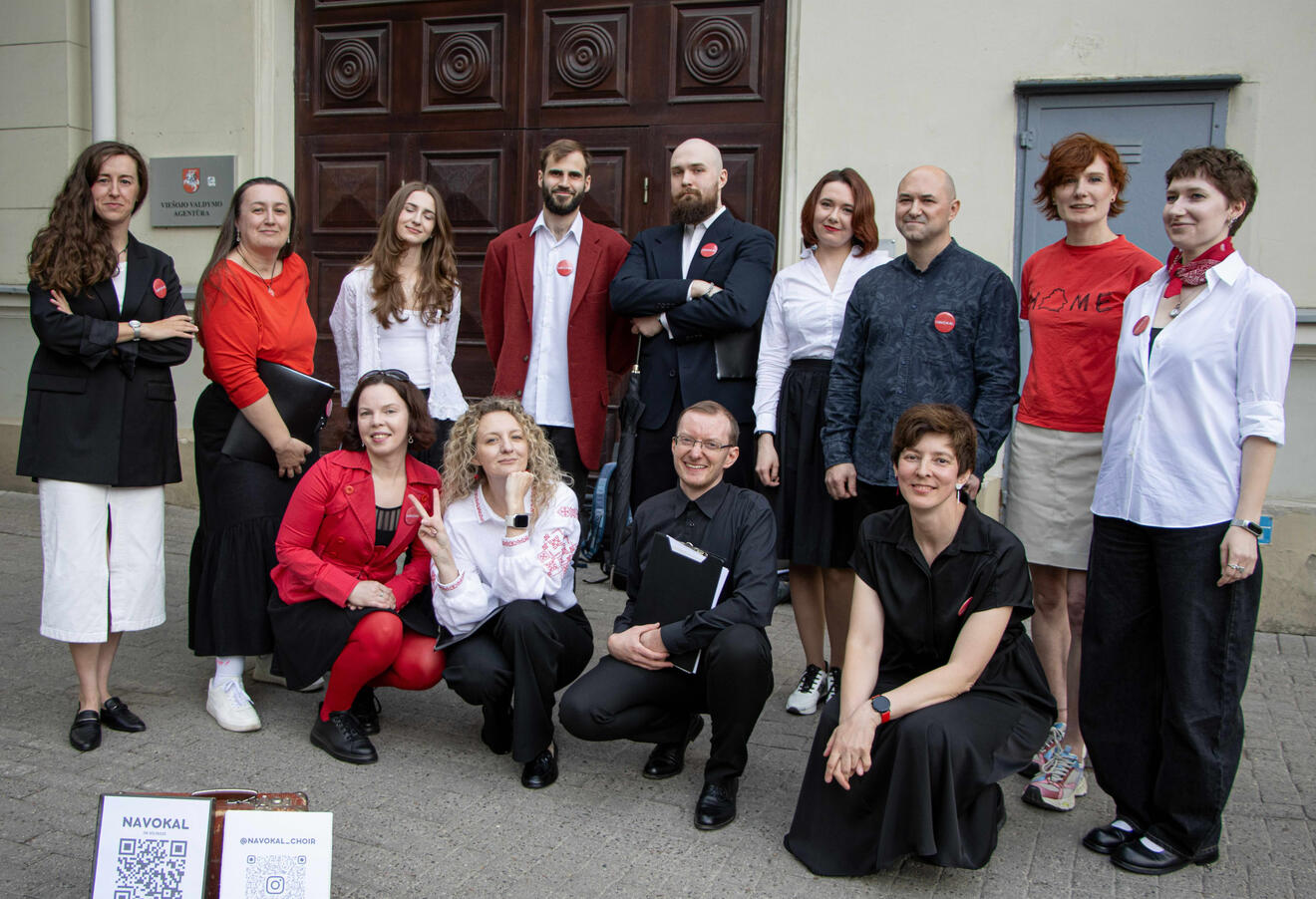
WELCOME! WE ARE NAVOKAL —
A BELARUSIAN AMATEUR CHAMBER CHOIR.
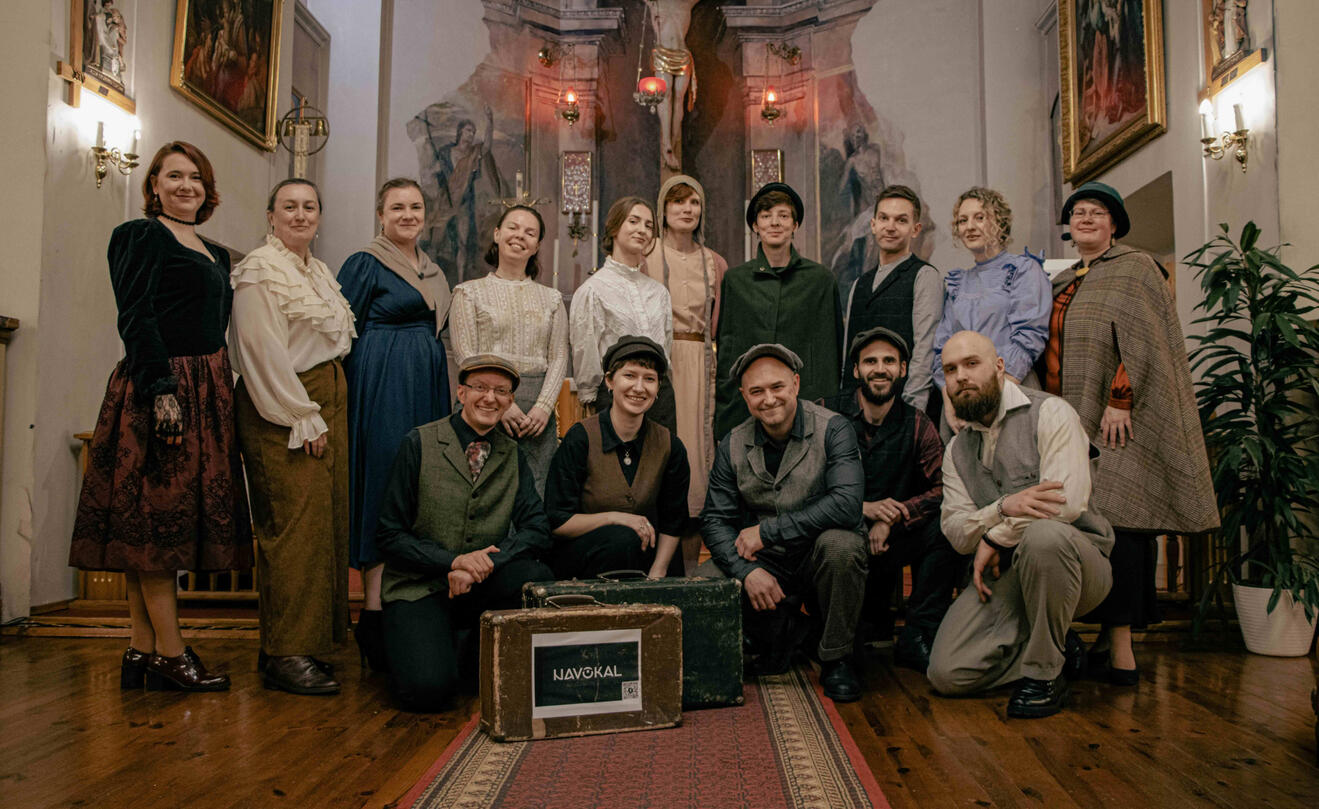
NAVOKAL was founded in Vilnius in 2024 for Belarusians who share a passion for cultural heritage and high-quality choral performance.
Our mission is to preserve and promote Belarusian musical heritage, bring together Belarusians and everyone interested in Belarusian culture beyond the country’s borders, and foster cultural exchange with the Lithuanian community.
Our repertoire
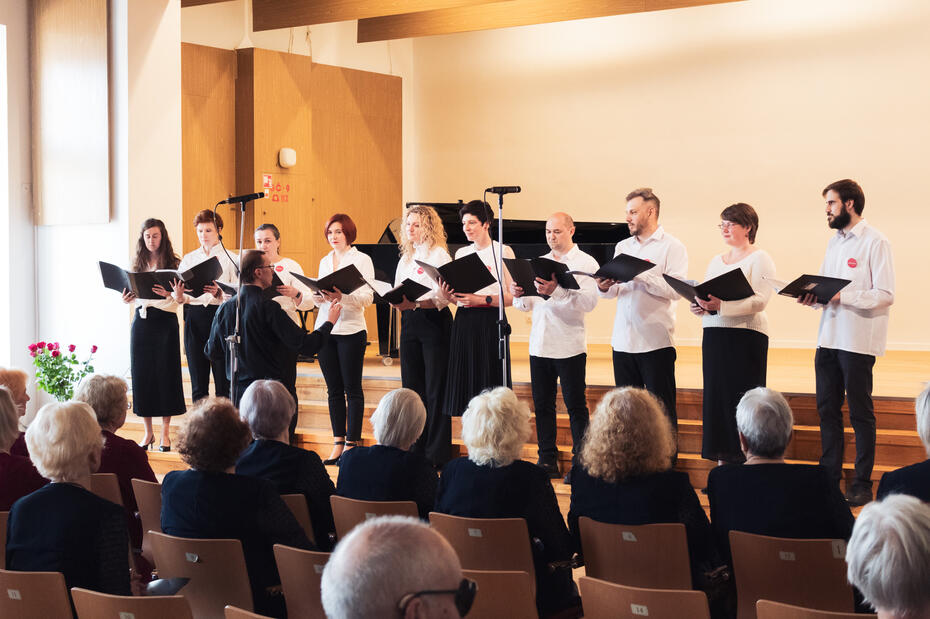
Our repertoire features a variety of music: sacred, classical, folk, and popular works by composers from Belarus, Lithuania, and other European countries.
Our experience
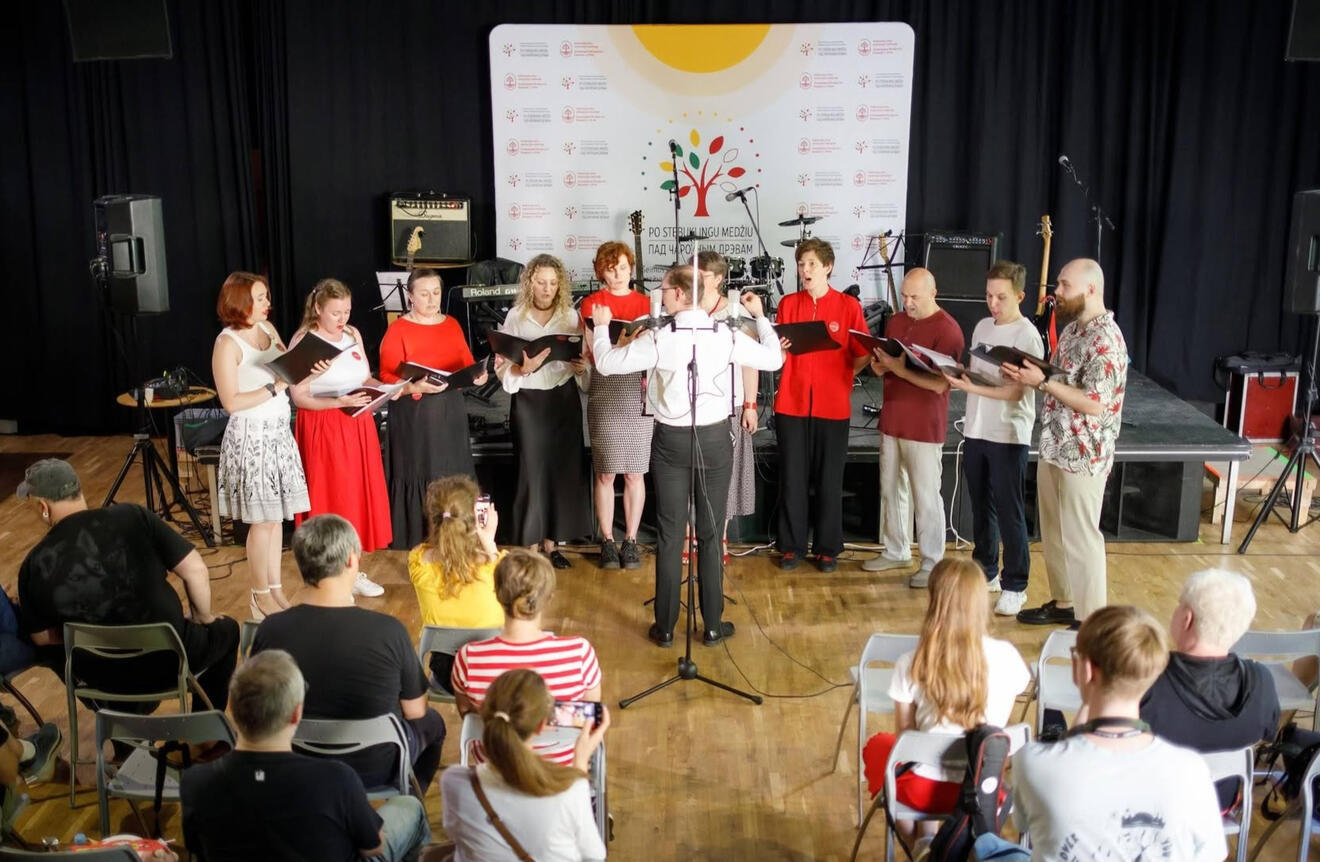
Since its founding, NAVÓKAL has participated in more than 20 concerts, festivals, academic, community, and cultural events across Lithuania.The choir regularly performs at city and international festivals, takes part in intercultural projects and charity initiatives, and collaborates with museums, universities, non-governmental organisations, and cultural institutions.
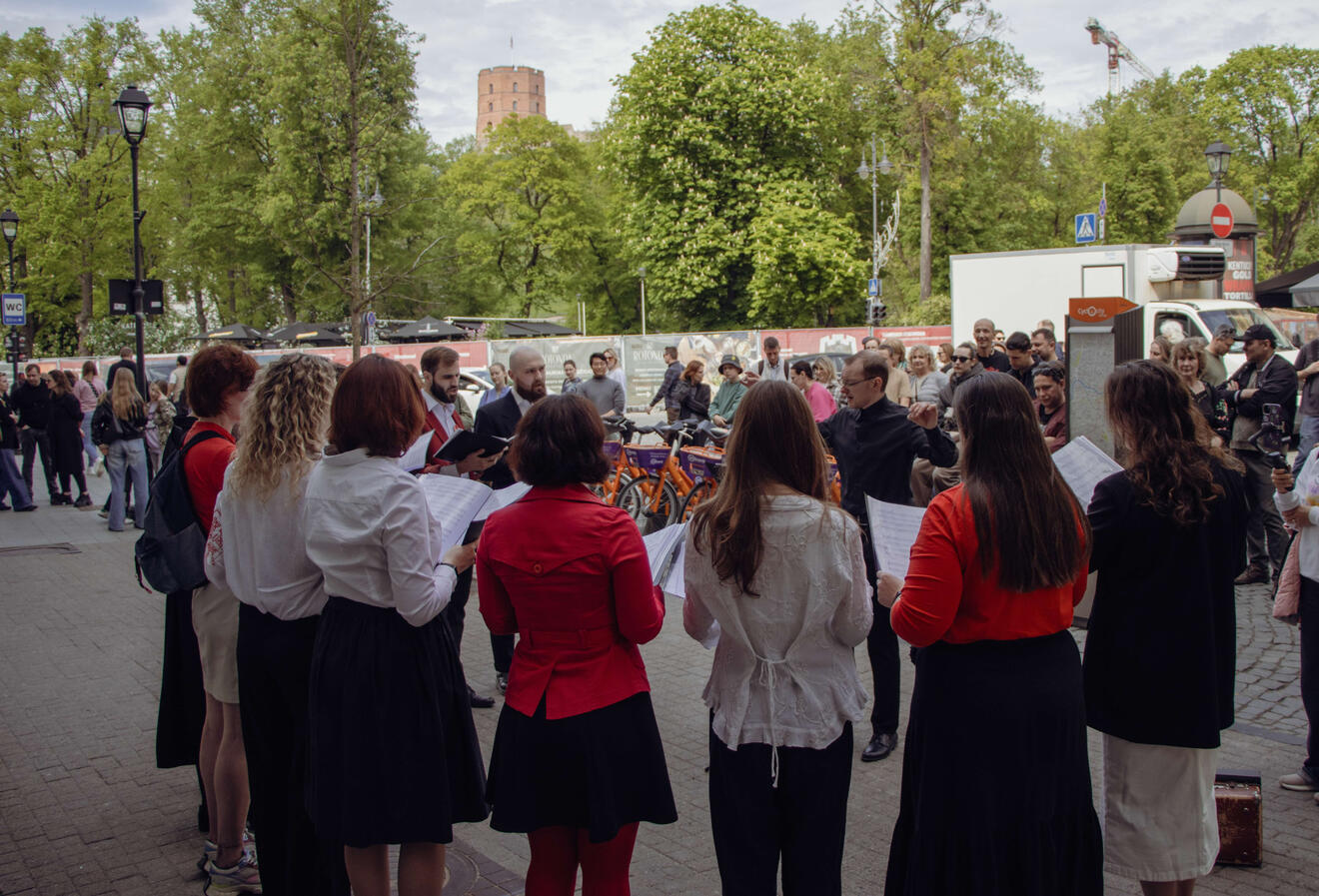
Highlights of our performances include Kultūros naktis (Culture Night), Gatvės Muzikos Diena (Street Music Day), Refugee Week Lithuania: Cultural Rhythms, the Belarusian–Lithuanian family festival Po stebuklingu medžiu, the Belarus Staražytnaja festival, the PRADMOVA Intellectual Book Festival, the international academic conference Translation at the Crossroads of Ideologies and Cultures, the original concert programme Mickiewicz in Belarusian, and many other cultural projects.


Mickiewicz in Belarusian
“Mickiewicz in Belarusian” is a literary and musical project that combines the poetry of Adam Mickiewicz with choral performance in Belarusian translations. It offers an opportunity to hear works that have never before been performed by choirs in Belarusian.
WHY MICKIEWICZ?
Adam Mickiewicz is one of the key figures of our region’s culture, whose work was shaped at the intersection of languages, traditions, and identities.
In Poland, Mickiewicz is regarded as one of their own, as he became the leading voice of Polish Romanticism and wrote “Pan Tadeusz,” “Dziady,” and other works in Polish that helped shape Polish national consciousness.
In Lithuania, he is seen as part of their heritage, since his “Litwo! Ojczyzno moja!” is addressed to his spiritual homeland and his Romantic ideal of the Grand Duchy of Lithuania.
In Belarus, he is remembered as a native of Belarusian land, raised in an environment where Belarusian was part of everyday life, and where Belarusian folklore and reality shaped his worldview. Researchers often refer to him as a Belarusian Polish-language poet and see him as one of those who brought images of the Belarusian landscape into European literature through Polish texts.
WHY IN BELARUSIAN?
The Belarusian language is a natural and important key to Mickiewicz’s heritage, connected to our land, history, and cultural memory. We aimed to enrich the Belarusian-language choral repertoire with works based on the texts of our renowned compatriot.
We are very happy to share our work so that more and more people around the world will sing Mickiewicz in Belarusian.